You can automatically detect and manage flaky tests in your PHP projects by integrating with Trunk. This document explains how to configure PHPUnit to output JUnit XML reports that can be uploaded to Trunk for analysis.Documentation Index
Fetch the complete documentation index at: https://trunk-4cab4936-sam-gutentag-batching-pfd.mintlify.app/llms.txt
Use this file to discover all available pages before exploring further.
Setup steps
Work through the steps below in order. Once you’ve finished the last one, you’ll be ready to move on to configure uploads in CI.Generating Reports
Trunk detects flaky tests by analyzing test results automatically uploaded from your CI jobs. You can do this by generating Trunk-compatible XML reports from your test runs. To generate XML reports, append--log-junit junit.xml to your phpunit test command:
Report File Path
The JUnit report is written to the location specified by--log-junit. In the example above, the test results will be written to ./junit.xml.
Disable Retries
You need to disable automatic retries if you previously enabled them. Retries compromise the accurate detection of flaky tests. PHPUnit doesn’t support retries out of the box, but if you implemented retries, remember to disable them.Try It Locally
The Validate Command
You can validate your test reports using the Trunk Analytics CLI. If you don’t have it installed already, you can install and run thevalidate command like this:
Test Upload
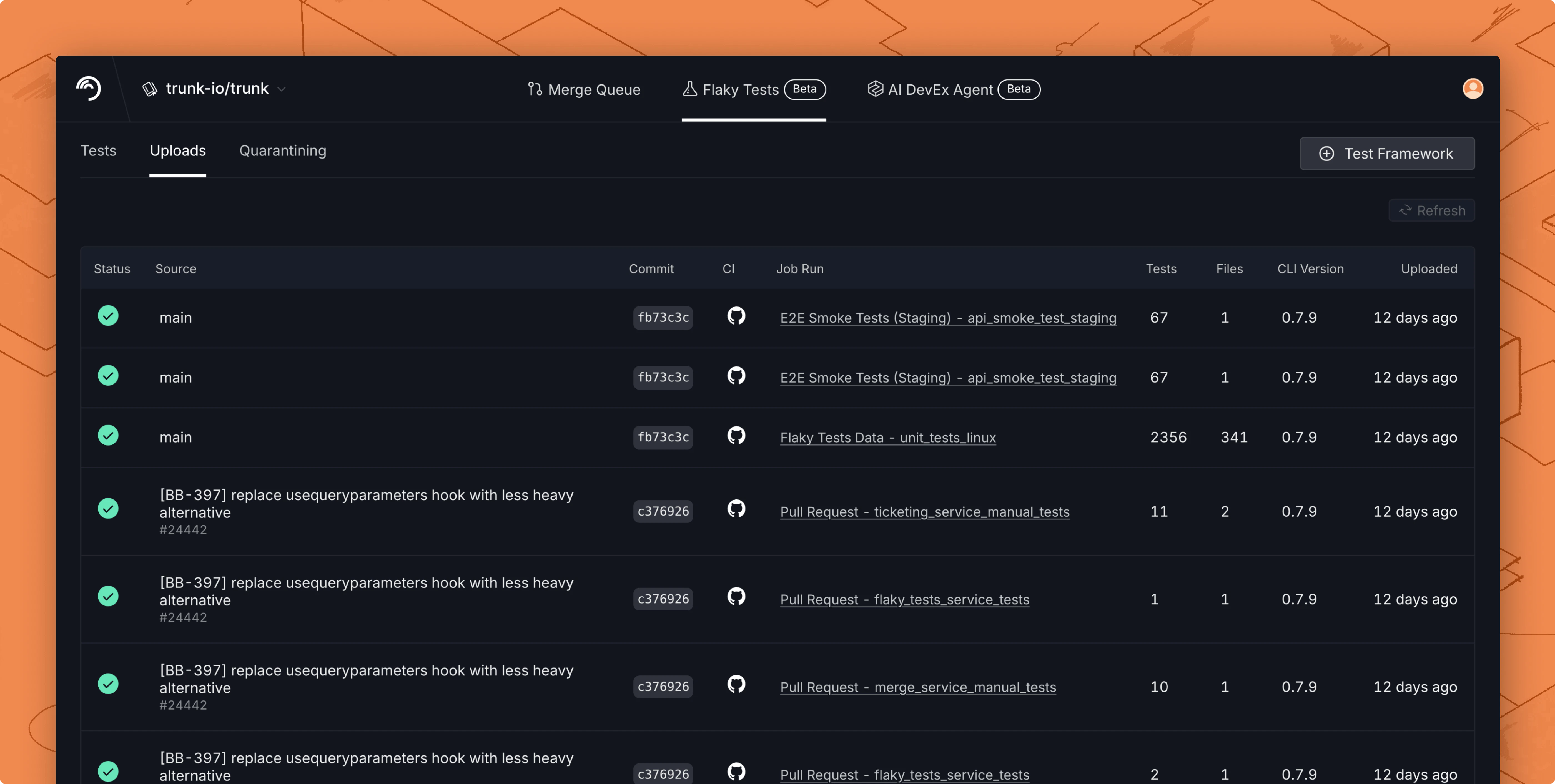
Before modifying your CI jobs to automatically upload test results to Trunk, try uploading a single test run manually. You make an upload to Trunk using the following command: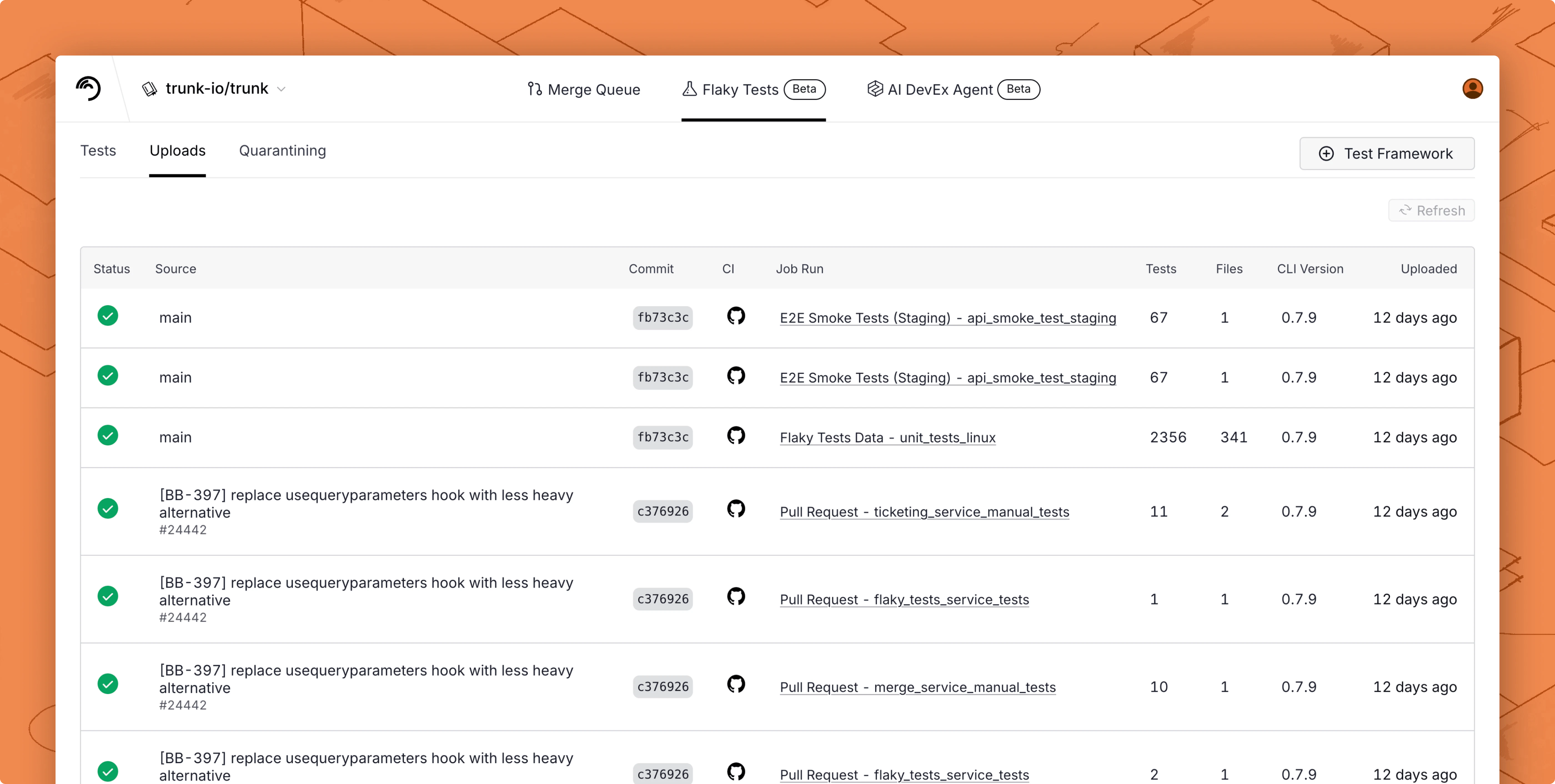
Next Steps
Configure your CI to upload test runs to Trunk. Find the guides for your CI framework below:
Azure DevOps Pipelines

BitBucket Pipelines

BuildKite

CircleCI

Drone CI

GitHub Actions

GitLab

Jenkins

Semaphore

TeamCity

Travis CI